Gabe Newell's Ocean Research Ship: Inside the $300 Million Research Vessel That Will Reach the Ocean's Darkest Depths

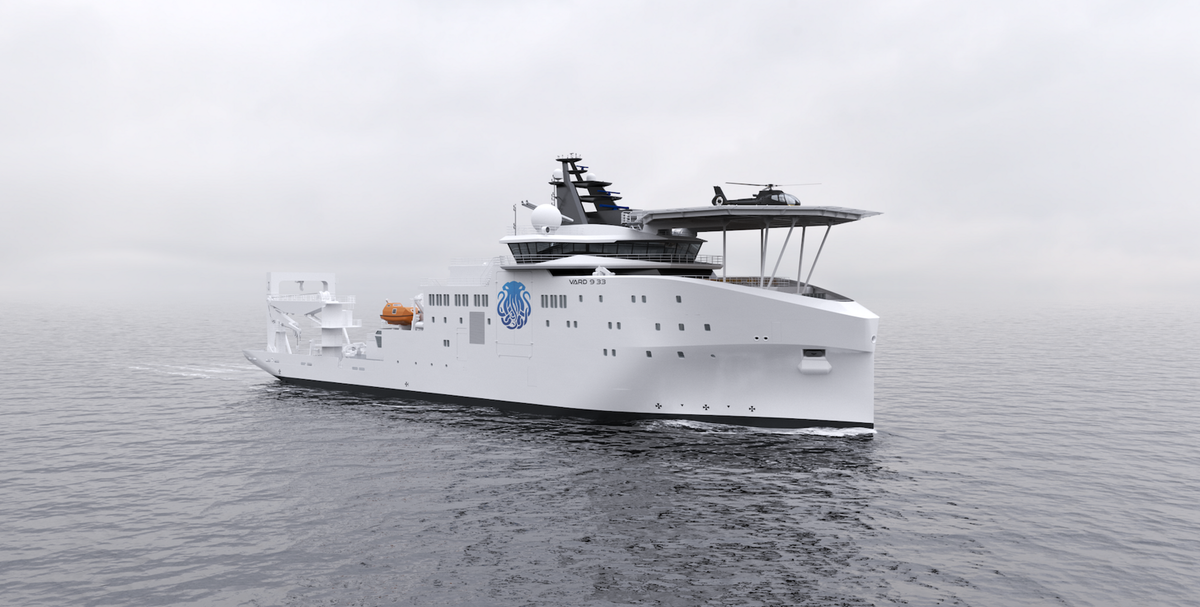
When a vessel captures the imagination, it is usually the silhouette that does the work: the length at the waterline, the profile of the superstructure, the headline figure attached to the build. With RV6000, the research flagship commissioned by Gabe Newell through his marine science organisation Inkfish, the more compelling story sits not in the hull but in the machinery that will actually put science into the water. Gabe Newell’s $300 million RV6000 is being built into the world’s most advanced private research vessel. To be ready in 2028, it will be loaded with smart cranes that can drop robots two Everest depths down so onboard scientists can study the darkest depths of the seas
That machinery has a name: Seaonics.
The Partnership That Makes the Mission Possible
Last year, the Norwegian maritime technology company announced a contract with Vard to deliver the complete research handling package for RV6000 — a 100-metre vessel with a budget of $300 million and a scheduled delivery in the second quarter of 2028. Seaonics occupies a specific and significant position within the Vard ecosystem, specialising in the mission-critical lifting, winching, and launch systems that determine whether a research vessel can actually perform the work it was designed for.
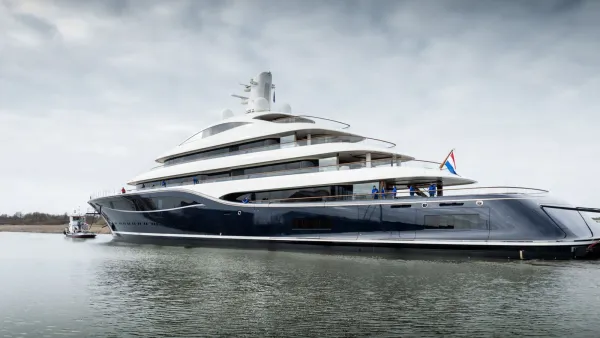
Courtesy of Vard.com
The distinction matters. The cranes and handling systems destined for RV6000 are not being sourced externally and integrated after the fact. They are being engineered within the same industrial family as the hull itself, aligning structural load paths, power distribution, and control logic from the earliest stages of design. The result, in theory, is a vessel where the hardware that touches the ocean is as coherent with the ship as the ship is with the sea.
Seaonics has described the project as a flagship contract... one that demonstrates what high operability and reliability look like in the most demanding oceanographic conditions. It also positions RV6000 not as an isolated commission but as the technological centrepiece of a growing research fleet that already includes RV Hydra and RV Dagon.
The Hardware That Will Reach 6,000 Metres
The handling package itself forms the mechanical architecture of the ship's scientific capability.
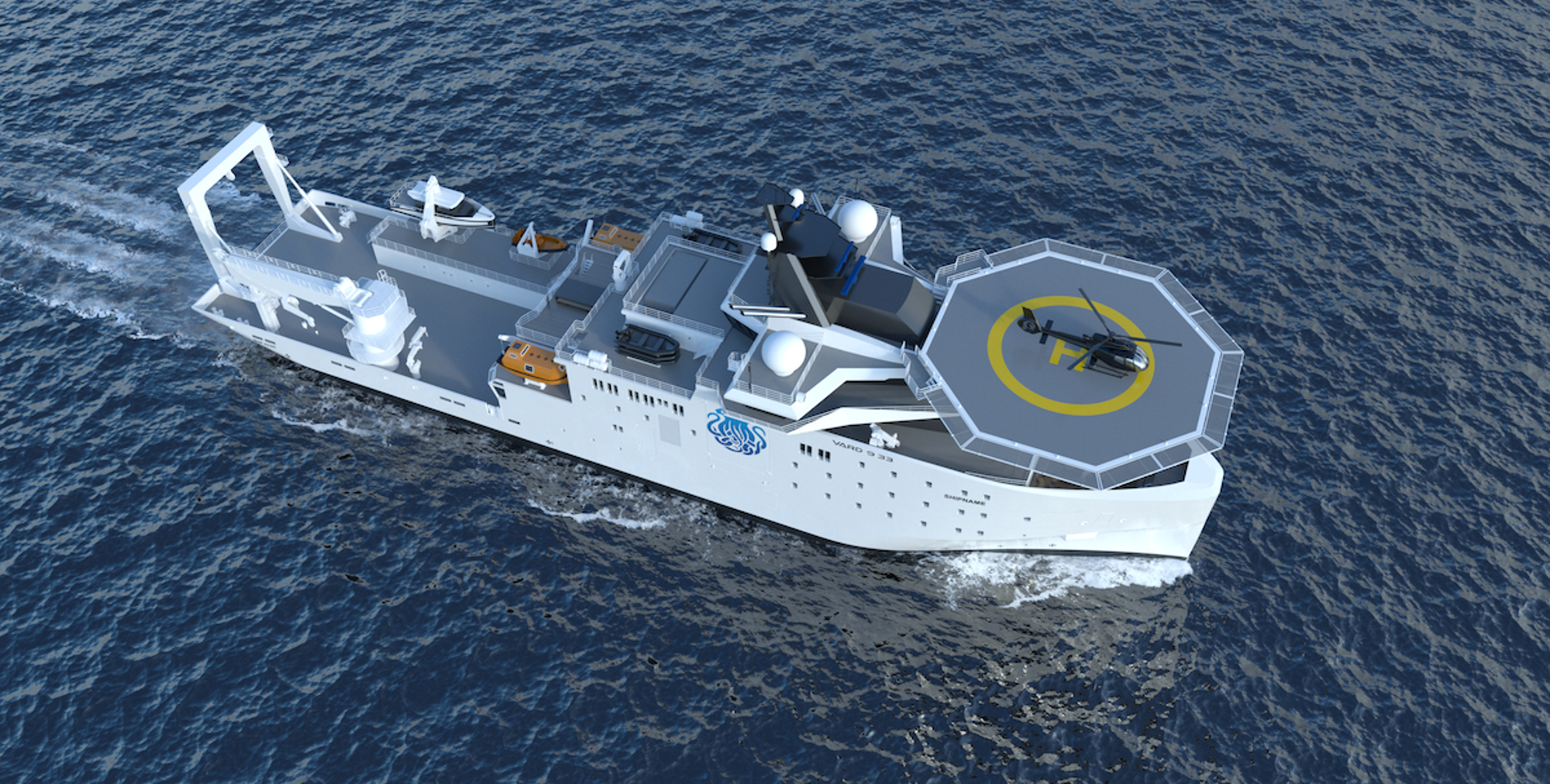
A large stern A-frame will pivot out over the vessel's wake, where surface turbulence can be managed more effectively than at the beam, enabling the controlled launch and recovery of heavy subsea equipment in conditions that would otherwise preclude operations entirely. Alongside it, a dedicated scientific winch system will manage the full range of deep oceanographic work: CTD casts, sediment coring, towed instrument arrays, and the long umbilicals required for deployments at extreme depth. These winches draw on Seaonics' electric and hybrid drive technology, with the capacity to regenerate electrical power back into the ship's grid during cable pay-out, reducing the energy burden during the most intensive phases of a mission.
A purpose-built Launch and Recovery System, designed specifically for ROV operations, will support Inkfish's 6,000-metre-class remotely operated vehicles. Equipped with active heave compensation and remote operation capability, it is engineered to manage the critical transition through the wave zone — the point where vessel motion, if uncontrolled, translates directly into shock loads capable of damaging both the ROV and its umbilical. Getting a vehicle through that zone cleanly, in heavy weather, at the beginning of a six-kilometre descent, is not a trivial problem.
Completing the system is a multi-purpose offshore crane on the starboard side, specified for active heave compensation and configured for operations to approximately 2,500 metres. It will carry the heavier subsea packages required for both robotic and potentially crewed interventions.
The Technology Beneath the Technology
Active heave compensation is the capability that makes deep operations in open ocean conditions genuinely possible rather than merely theoretical. These systems continuously sense the vessel's vertical motion and adjust cable length in real time, holding the suspended load as stable as possible relative to the seabed regardless of what the surface is doing. For an ROV beginning a 6,000-metre descent through three-metre swell, that active management is not a refinement: it is the operational boundary between a successful deployment and a catastrophic one.
The electric and hybrid drive architecture carries a second benefit beyond energy efficiency. Reduced mechanical noise and vibration translate directly into a quieter acoustic environment, which matters considerably for the sensitive hydroacoustic instruments and mapping systems that modern oceanographic research depends upon. A vessel that generates its own interference is a vessel working against itself.
The Vision at Depth
RV6000 is being built by Vard for delivery in mid-2028, designed to sustain multi-month missions with up to 70 scientists and crew. With Seaonics providing the arms that will lower instruments, vehicles, and eventually perhaps people to depths twice the height of Everest, the vessel moves from ambition to engineering reality.
What makes it significant is not only the depth it will reach, but the coherence of its design: a privately funded research ship conceived as a system rather than assembled as a collection of capable parts. In that respect, RV6000 represents something the superyacht world has long understood and the scientific community is only beginning to fully embrace: that the most capable vessels are the ones where nothing was added as an afterthought.
At YachtWay, we follow the vessels that push the boundaries of what is possible on the water. Explore the world's most extraordinary yachts for sale at YachtWay.com.